Other People are Human: Using Dale Carnegie's Principles to Engage in Civil Disc
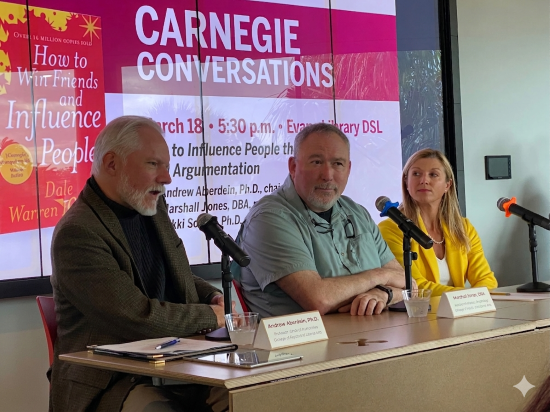
On Wednesday 18 March, the Evans Library held its second of two programs on Dale Carnegie's classic book How to Win Friends and Influence People. You can read about our first program Communicating to Win here. The library partnered with SGA who purchased over 100 copies of the book to distribute to Florida Tech students, who took them all in only a few days. In addition, the Evans Library organized two panel discussions on the book's principles. The second of which How to Influence People through Civil Argumentation featured Dr. Andrew Aberdein, Professor of Philosophy and Chair of Humanities Programs at Florida Tech; Dr. Marshall Jones, former law enforcement officer and Director of the Center for Applied Criminal Case Analysis at Florida Tech; and Dr. Nikki Souris Associate Professor of Law & Society and Pre-Law Advisor in the School of Arts & Communications. The panel discussed using Carnegie's principles to engage in civil discourse with others, especially those with whom we disagree.
The first issue the panel had to tackle was how did our society become so polarized in the first place. This is not a question with an easy answer. As the panelists explained, students today have never lived in a non-polarized time. The kind of uncivil, polarizing discourse in which they engage is what has always been modeled for them. Politicians and those who seek our time and attention, often engage in over-the-top rhetoric and divide-and-conquer tactics, making the "other side" out to be first-rate villains. As a result, this generation of students sees your arguments and where you stand on issues as a demonstration of your moral character.
Further, too many people out there want to tell us what our opinions should be, and we are often too cognitively lazy to figure out what we think.
Simple and Timeless: Using Dale Carnegie's Principles to Meet New People
Campus reads, where an entire college campus reads a book, giving students, faculty, and staff a common starting point for conversations, group discussions, and even classroom lectures, and popular right now on college campuses across America. (Public libraries have also facilitated community reads for their patrons and local community for much the same reasons.) The Evans Library was curious as to how well a campus read would succeed at Florida Tech, so decided to pilot one in the spring semester. The first question in a campus read is always what book to read. To answer that question, the library asked how do we want students to benefit? Two of the biggest issues college students across the country currently face is a lack of friends and an difficulty discussing issues with someone with whom they disagree. In thinking about what book could help people improve their communication skills to both meet new people and engage in civil disagreement, one book rose to the top of the list: How to Win Friends and Influence People. Dale Carnegie's classic was published in 1936, and in the 90 years since it has sold over 30 million copies to become one of the best selling books of all time.
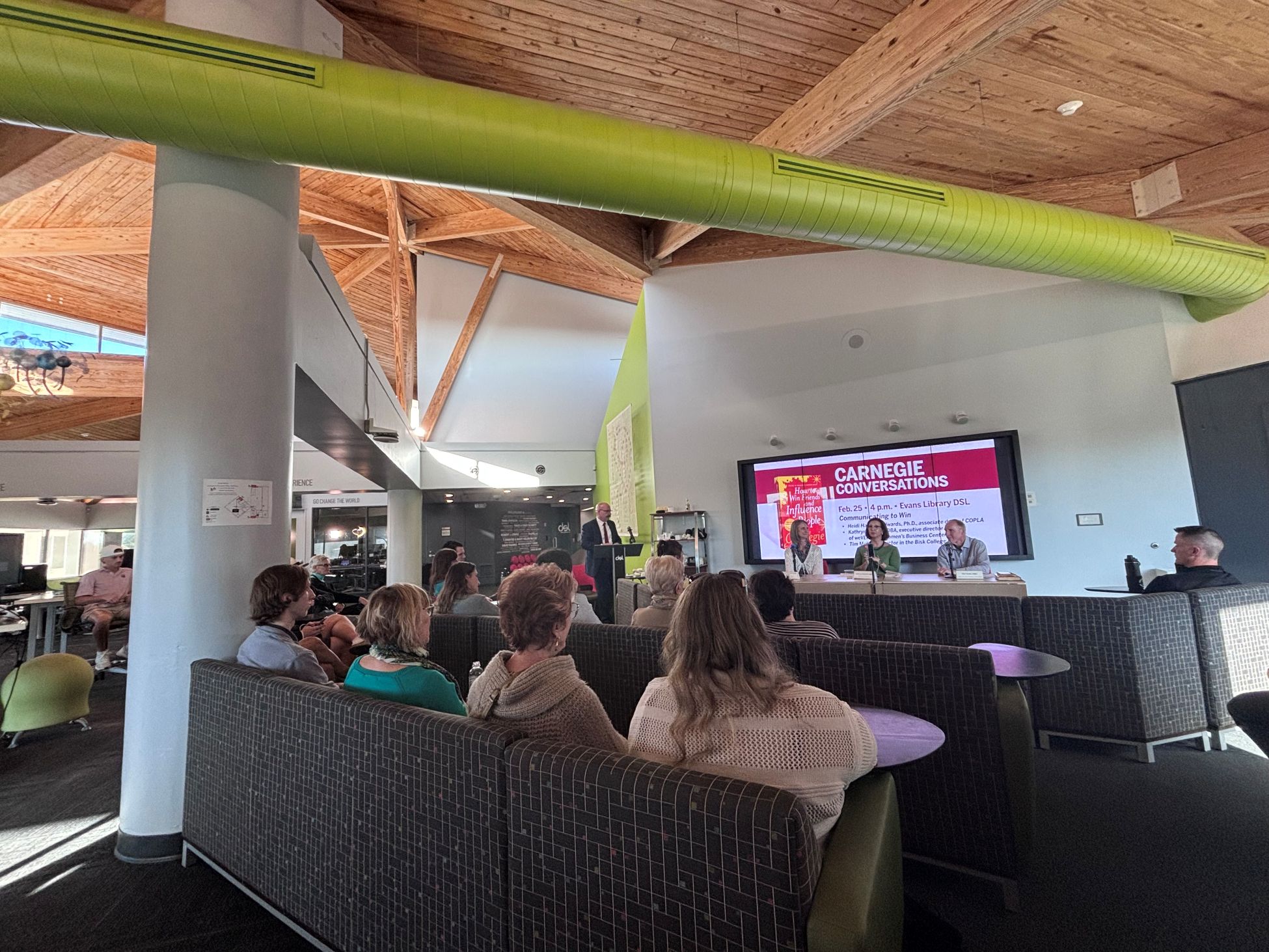
The library partnered with SGA who purchased over 100 copies of the book to distribute to Florida Tech students, and they were all taken by students within a few days. In addition, the Evans Library organized two panel discussions on the book's principles. The first of which Communicating to Win was held on February 25th in the Evans Library DSL and consisted of Heidi Hatfield Edwards, Associate Dean of the College of Psychology and Liberal Arts; Tim Muth, Faculty in the Bisk College of Business; and Kathryn Rudloff, Executive Director of weVENTURE Women's Business Center. The panel discussed using Carnegie's principles to meet new people, personally and professionally, and improve their communication skills all-around.
Where High Achievers Thrive: Academic Success & the Evans Library
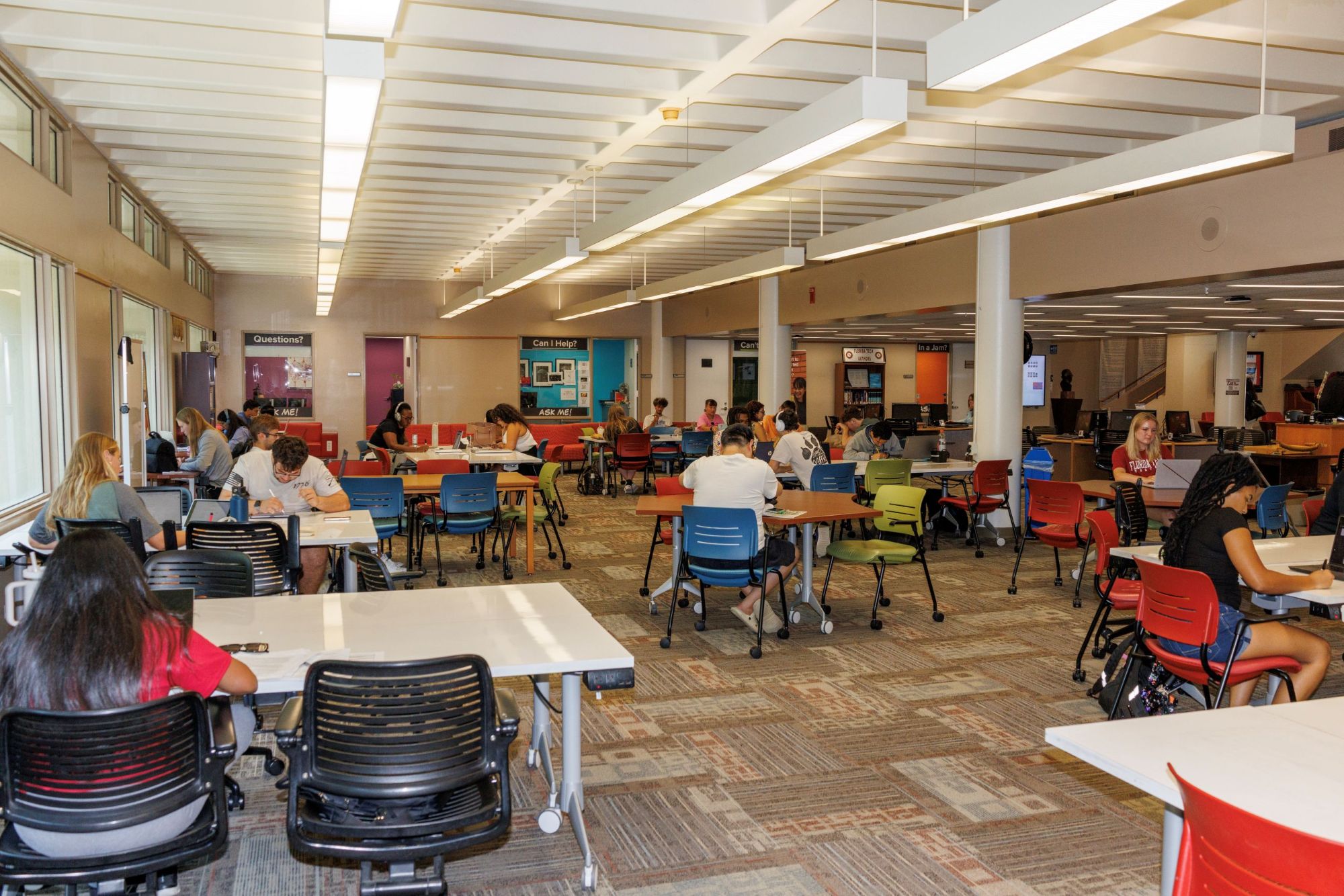
It’s no secret that the library helps students succeed by providing them with the resources, assistance, and spaces they need to complete their research projects and class assignments, but that is far from the only thing we do to support academic excellence. Evans Library has always been devoted to helping our students at every stage of their academic journey.
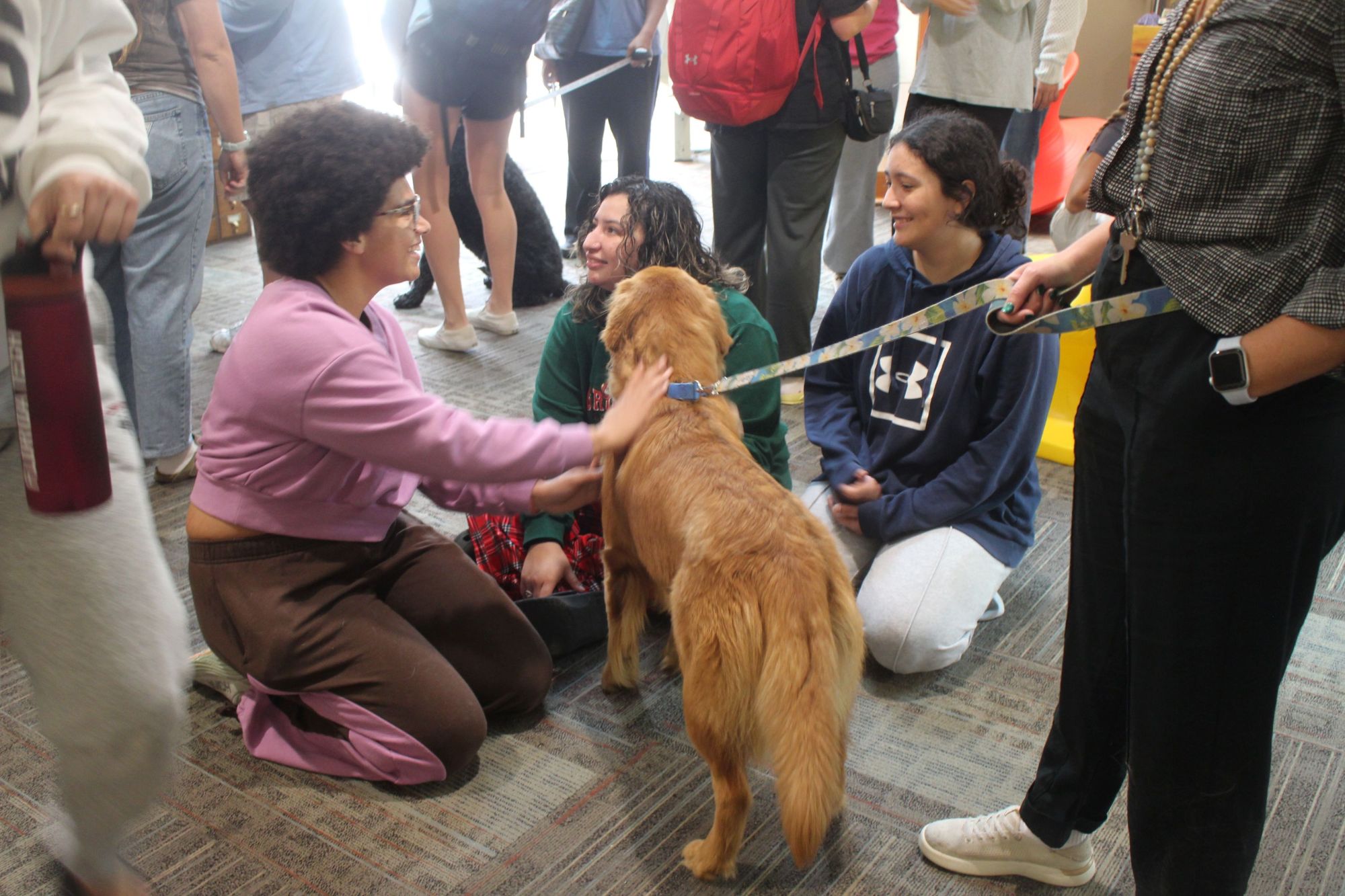
Holistic Student Success: Florida Tech Student Wellness
College life can be overwhelming, and we know it! That’s why Evans Library is more than just a place to study or cram for finals; we intentionally design our spaces, services, and events to help students relax, unwind, and replenish their energy. While college often brings stress, it also offers a chance to learn how to manage it in positive, healthy ways. At Evans Library, we’re here to support students not only in their academic journey but in building a fulfilling, balanced life.
So, how do we help students manage stress? Across our four floors of study rooms and collaborative spaces, you’ll also find areas designed to encourage meaningful breaks. Our entire fourth floor is dedicated to silence, not just for focused study, but for true mental rest. The Silent Floor features a peaceful Relaxation Room complete with zero-gravity chairs, bean bags, and cozy sofas where students can unplug and reset. The floor’s sweeping views of blue Florida skies and lush greenery of Florida Tech’s Botanical Gardens provide small but powerful moments of tranquility.
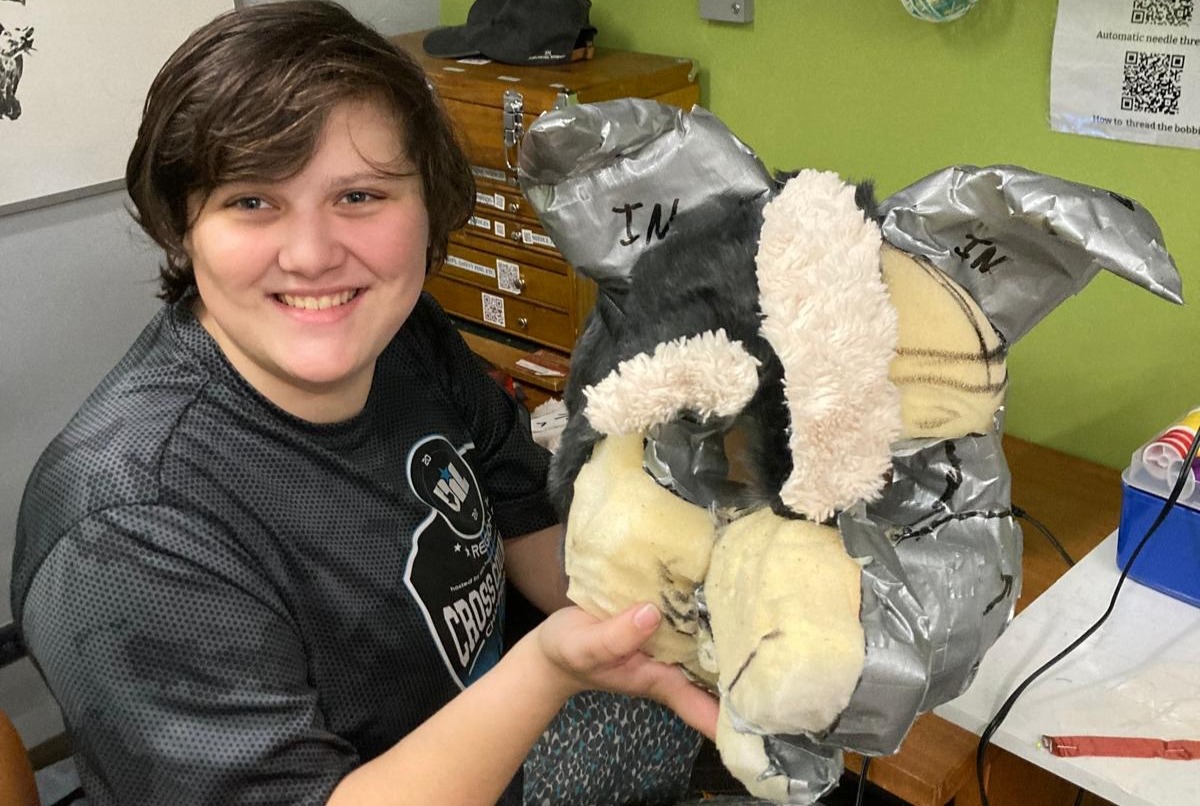
The CraftLab Origin Story: A Vision to Support Student Creativity
The CraftLab began as a response to a need that Kristin Heifner, User Experience Librarian, had sensed for years. Even before the pandemic, students gravitated toward creative stress‑relief activities the library offered during 24/7 Finals Weeks —coloring sheets, lavender eye masks, sand bottles, watercolor postcards, and yarn kits. Students also frequently asked for basics like scissors, glue, markers, and hot glue guns at the iDesk, whether for school assignments, personal projects, or something as simple as making a Valentine’s Day card.
The seeds of the CraftLab were planted in Fall 2020, during the strange, quiet semester after COVID‑19 closures. The library had some equipment on hand already, including a large‑scale vinyl cutter donated by COES professor James Brenner, Ph.D., through a KEEN grant. The equipment needed to be available to students, but no one had yet decided where or how. Kristin saw the opportunity.
In Spring 2021, she began running sublimation workshops in a small administrative office, and the response was immediate - students were spilling out of the room and into the surrounding library spaces. By Fall 2021, the space finally had a name: the CraftLab and its official rollout during orientation week in August featured customized keychains, which helped spread the word quickly.
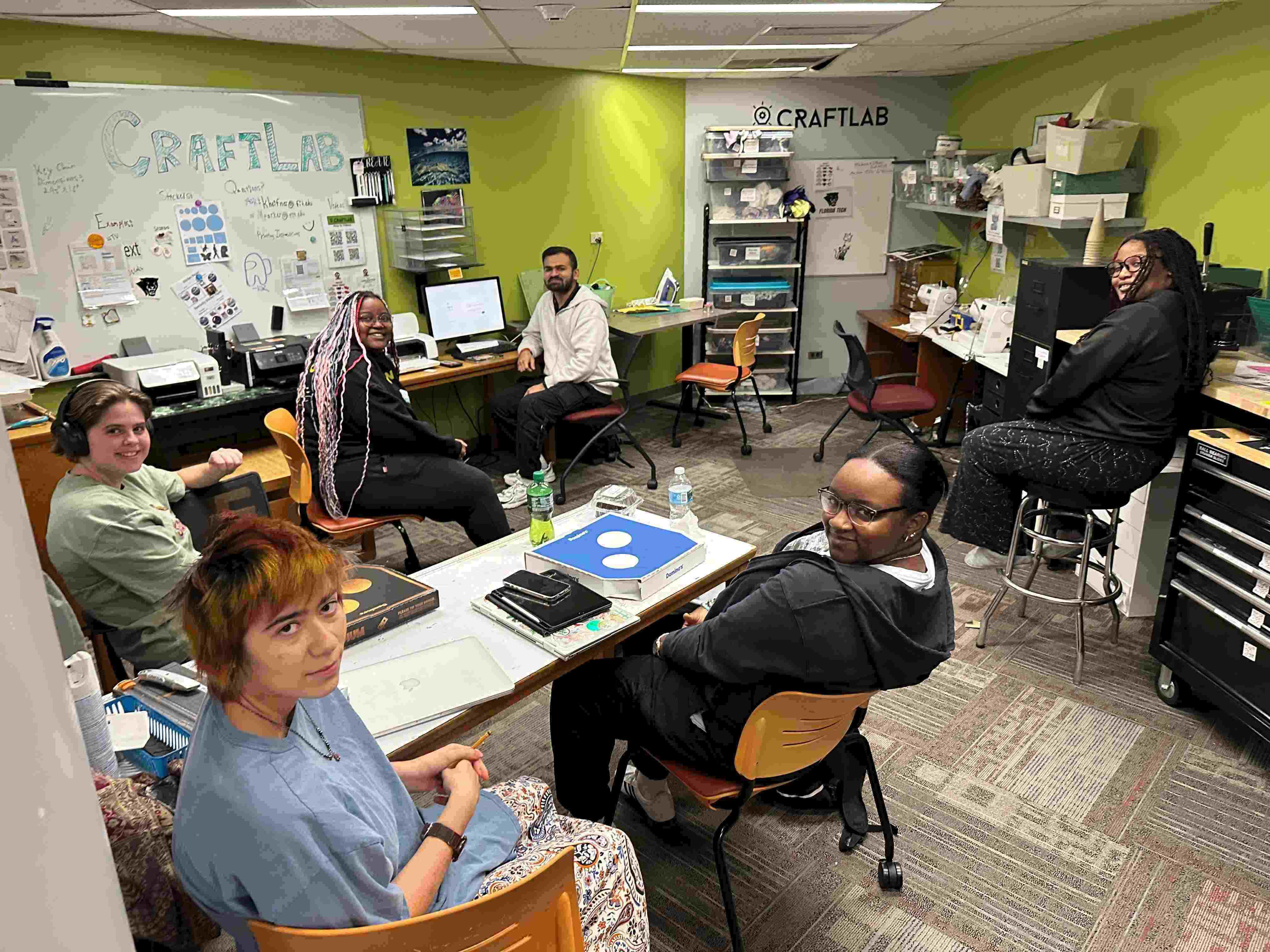
Peek into the Library’s CraftLab: Where Creativity Builds Community
Tucked inside the library, the CraftLab has quietly grown into one of the most beloved spaces on campus—a place where students come not only to create, but to relax. Between engineering equations, programming assignments, and physics problem sets, it offers something rare: time, materials, and a welcoming community where creativity isn’t just encouraged—it’s shared.
Located on the first floor of the Library, the CraftLab is a compact but ever‑expanding hub packed with tools and supplies for every kind of maker. Students can dive into projects using a vinyl cutter, sewing machines, heat presses, button makers, a sublimation printer, and a simple laminator. With plenty of craft materials available, the space offers everything needed to design, experiment, and bring creative ideas to life. Students also have access to a laser engraver and 3D printers in the Library’s DSL upstairs.
For Natalie Johnson, a second‑year Mechanical Engineering student, who is working in the CraftLab as a Federal Work Study for the second year, the connection was immediate. “I saw the heat press through the window,” she said with a laugh. “That was my first reason for coming in. I’ve always loved heat‑transfer vinyl, and after interviewing to work here, I wanted the job even more.”