/prod01/channel_122/lib/media/fit-website/site-assets/images/FT-Horiz_crimson-gold.png)
The CraftLab began as a response to a need that Kristin Heifner, User Experience Librarian, had sensed for years. Even before the pandemic, students gravitated toward creative stress‑relief activities the library offered during 24/7 Finals Weeks —coloring sheets, lavender eye masks, sand bottles, watercolor postcards, and yarn kits. Students also frequently asked for basics like scissors, glue, markers, and hot glue guns at the iDesk, whether for school assignments, personal projects, or something as simple as making a Valentine’s Day card.
The seeds of the CraftLab were planted in Fall 2020, during the strange, quiet semester after COVID‑19 closures. The library had some equipment on hand already, including a large‑scale vinyl cutter donated by COES professor James Brenner, Ph.D., through a KEEN grant. The equipment needed to be available to students, but no one had yet decided where or how. Kristin saw the opportunity.
In Spring 2021, she began running sublimation workshops in a small administrative office, and the response was immediate - students were spilling out of the room and into the surrounding library spaces. By Fall 2021, the space finally had a name: the CraftLab and its official rollout during orientation week in August featured customized keychains, which helped spread the word quickly.
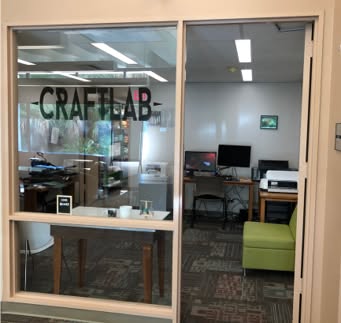
Donations continued to arrive—a Cricut machine, a sewing machine, and countless bins of fabric, ribbon, and paper‑crafting supplies. While the popularity of the CraftLab and its clear potential grew organically, almost explosively, space quickly became an issue. “We outgrew that tiny office in less than a year,” Heifner said.
In Fall 2022, the CraftLab moved into its current location on the first floor of the Library between the two entrances to the building. The former office space vacated by university transitions offered much more room for projects, workshops, and community building. Students embraced it wholeheartedly, and librarians - Heifner among them - became increasingly craft‑savvy to keep up. “At the beginning, the Dean wasn’t sure how well students would take to it,” she said. “But it quickly became clear that the CraftLab fulfilled a creative need our students have.”
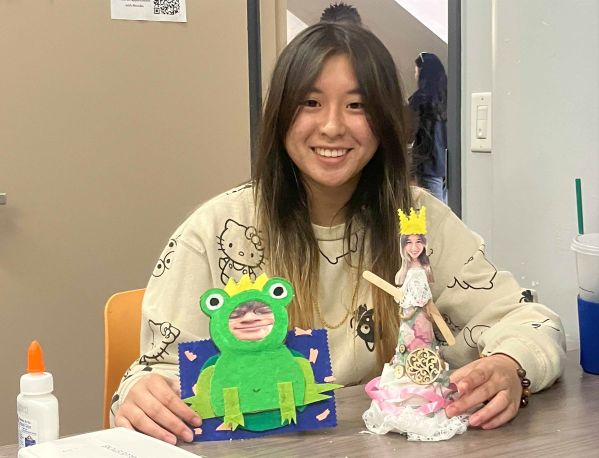
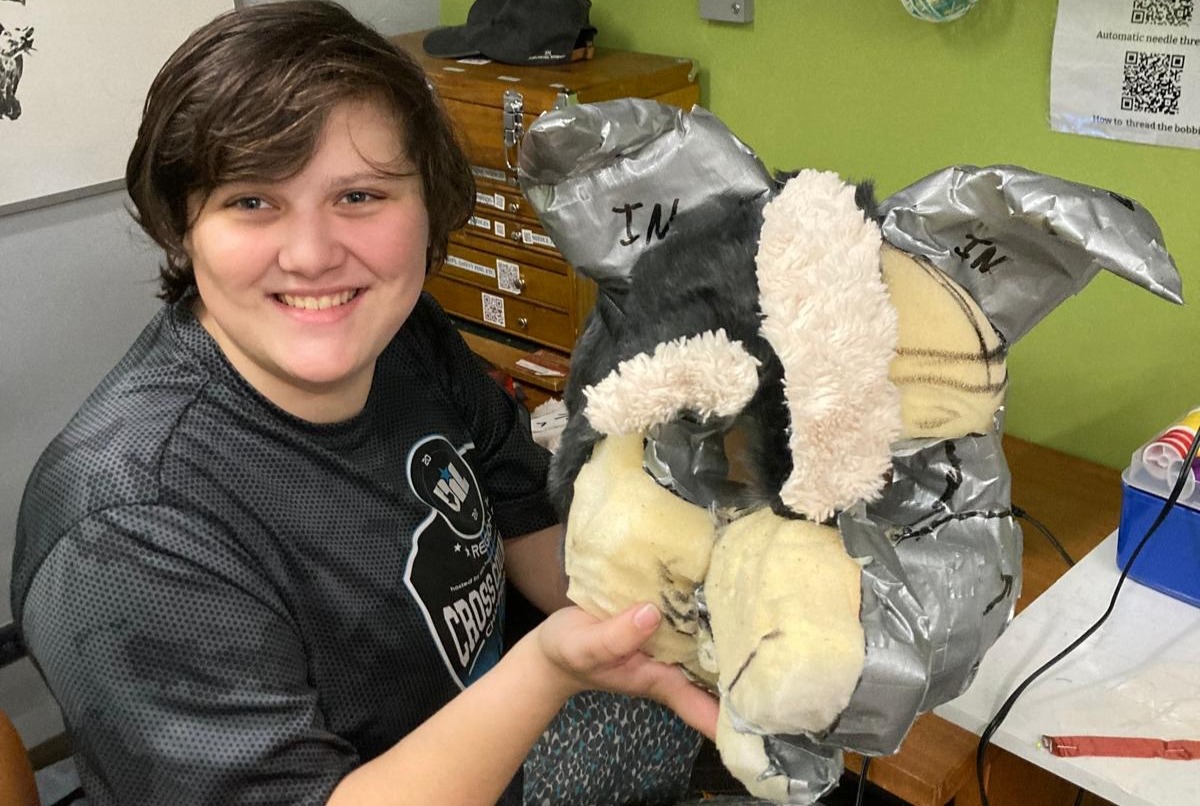
Today, the CraftLab is open for the same hours as the library and supported by both Heifner and iDesk Supervisor Monika Parker, as well as a team of five trained student workers, who collectively staff it for about 40 hours a week. Video tutorials guide students when staff isn’t present, and the space is stocked with core reusable supplies, supplemented by generous donations from campus and community members. Students come in to sew, press vinyl, design sublimation patches, and make stickers, buttons and cards for everything from birthdays to sorority and fraternity Big/Little gifts.
The space is constantly busy now. “It’s always full of people,” Heifner explained. “It used to be that you might walk by and see no one. Now it’s consistently active."
.jpg)
Parker encouraged frequent denizens of the CraftLab to start a new student organization - the Sewing & Crochet Club - of which she is the advisor. They frequently table at Market Day to show off their creations. Monika sees sewing as both empowering and sustainable. “It’s a life skill. If you can repair or repurpose items you already own, you don’t have to throw them away. Libraries already contribute to sustainability by letting people use things without buying them—but creating and repairing takes that to the next level.
“Libraries are not just books,” she continued. “People sometimes have a mistaken impression. Libraries are a third space—somewhere that’s not home and not work, where you can go without spending money. Information and creativity go hand in hand, and the CraftLab is the evolution of that. It provides the space and the tools to create.”
.jpg)