/prod01/channel_122/lib/media/fit-website/site-assets/images/FT-Horiz_crimson-gold.png)
Campus reads, where an entire college campus reads a book, giving students, faculty, and staff a common starting point for conversations, group discussions, and even classroom lectures, and popular right now on college campuses across America. (Public libraries have also facilitated community reads for their patrons and local community for much the same reasons.) The Evans Library was curious as to how well a campus read would succeed at Florida Tech, so decided to pilot one in the spring semester. The first question in a campus read is always what book to read. To answer that question, the library asked how do we want students to benefit? Two of the biggest issues college students across the country currently face is a lack of friends and an difficulty discussing issues with someone with whom they disagree. In thinking about what book could help people improve their communication skills to both meet new people and engage in civil disagreement, one book rose to the top of the list: How to Win Friends and Influence People. Dale Carnegie's classic was published in 1936, and in the 90 years since it has sold over 30 million copies to become one of the best selling books of all time.
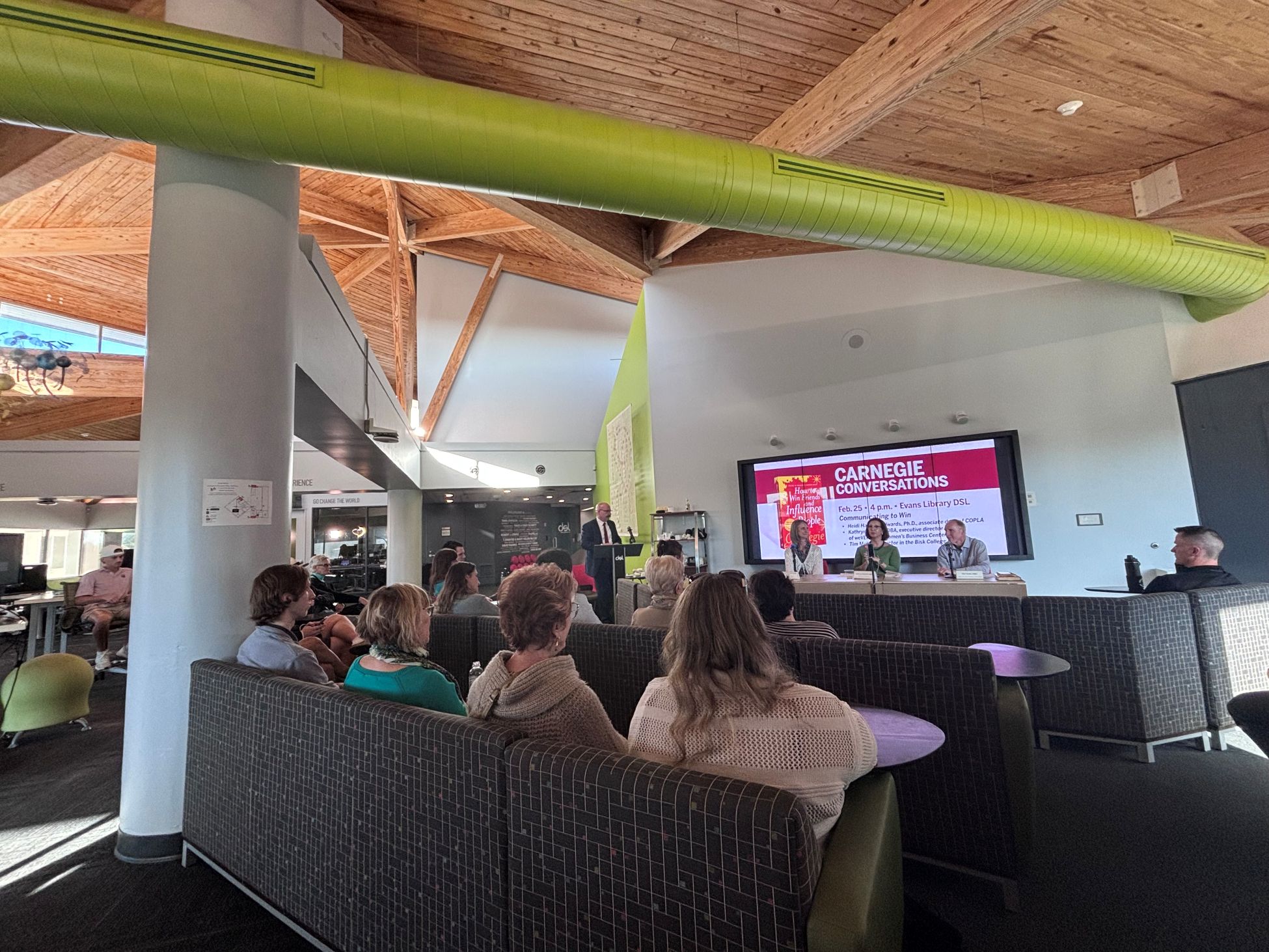
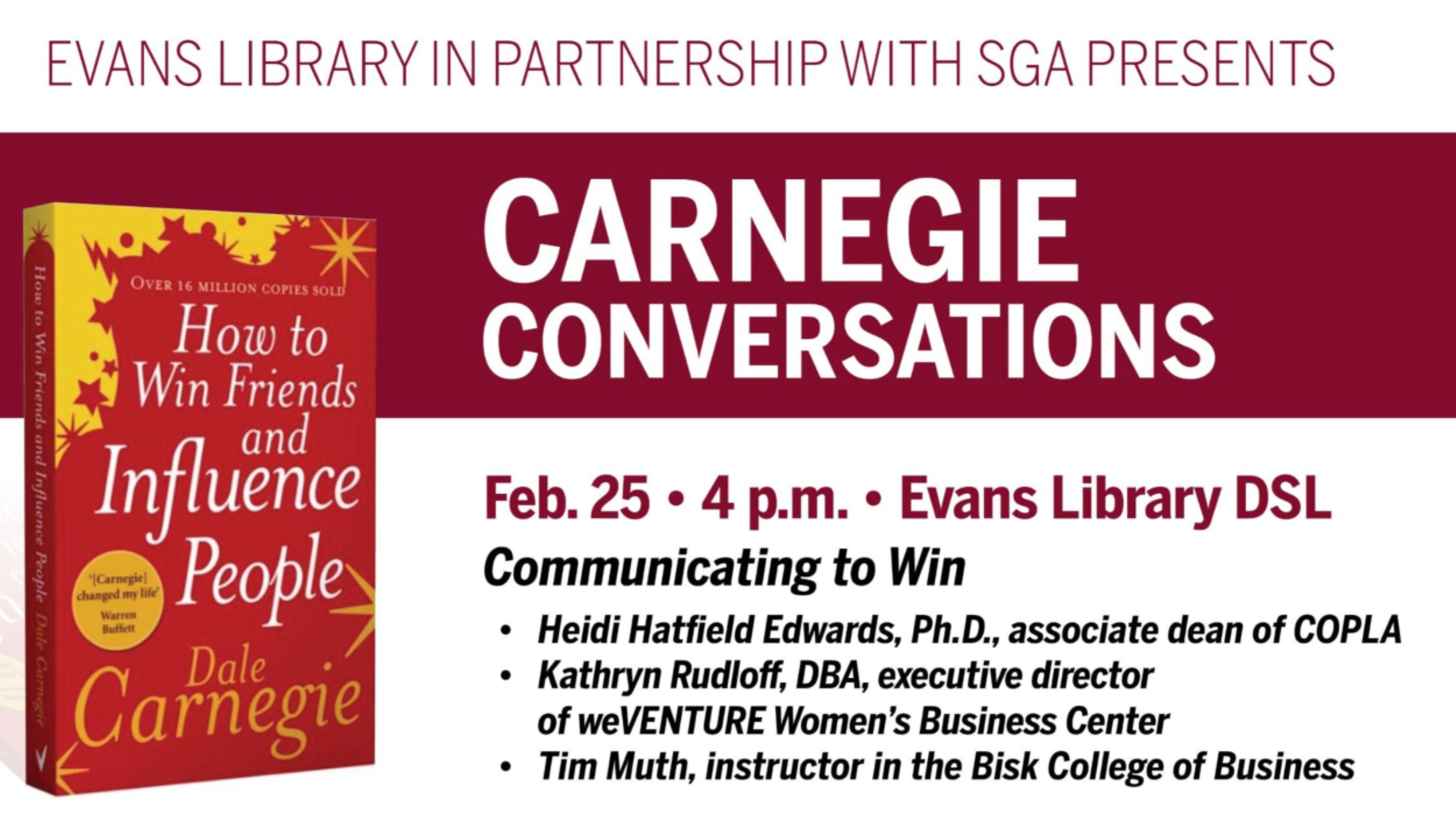
The library partnered with SGA who purchased over 100 copies of the book to distribute to Florida Tech students, and they were all taken by students within a few days. In addition, the Evans Library organized two panel discussions on the book's principles. The first of which Communicating to Win was held on February 25th in the Evans Library DSL and consisted of Heidi Hatfield Edwards, Associate Dean of the College of Psychology and Liberal Arts; Tim Muth, Faculty in the Bisk College of Business; and Kathryn Rudloff, Executive Director of weVENTURE Women's Business Center. The panel discussed using Carnegie's principles to meet new people, personally and professionally, and improve their communication skills all-around.
When asked why after 90 years the book was still so popular, the panelists agreed it was Carnegie's simple principles that made the book a classic. The book is timeless because the principles laid out in the book are true to and of people across eras and geographic regions.
For professor Tim Muth, the most important principles from the book are “Call people by their names, smile, and compliment people frequently.” These principles create an immediate connection through warm, personal interaction.
In order to meet new people in any context, the panel agreed you need to display the Carnegie principle to be "genuinely interested in other people." People are not a means to an end, but an end in-and-of-themselves. Being genuinely interested in who a person is and not merely what they can do for you is one of the best ways to get to know someone.
Another popular principle was "Don't criticize, condemn, or complain." No one likes a negative person, and it can be so easy to become negative about a situation or a person. Far betters way exist to create change than simply pointing out and putting down everything you think is wrong. This is especially off-putting when meeting someone new, and doubly-especially off-putting when telling the new person what you think is wrong with them.
Of course, these principles are not all there is to know about communication and dealing with people. Dr. Rudloff added the principle of "eating crow," or admitting when you are wrong or made a mistake. This is especially important for leaders. Professor Muth told the audience he would add “Always say thank you, have a sense of humor, and acknowledge the receipt of emails and other messages.”
All panelists agreed it is important to be present with another person, which is so hard right now in our distracted age of smart phones, smart watches, tablets, and the like.
After some great student questions, Dr. Hatfield Edwards ended the afternoon with wise words for the attendees. "Easily engaging others in conversation comes naturally for some people, but for those who find it difficult, you can develop those skills with practice. Start small. Be genuinely curious and interested. Listen. Learn from the awkward moments and be encouraged by the successes. It will become more natural."
Out next Carnegie Conversation How to Influence People through Civil Argumentation will be on Wednesday March 18th at 5:30pm in the DSL.