/prod01/channel_122/lib/media/fit-website/site-assets/images/FT-Horiz_crimson-gold.png)
Evans Library Welcomes Students, New and Old
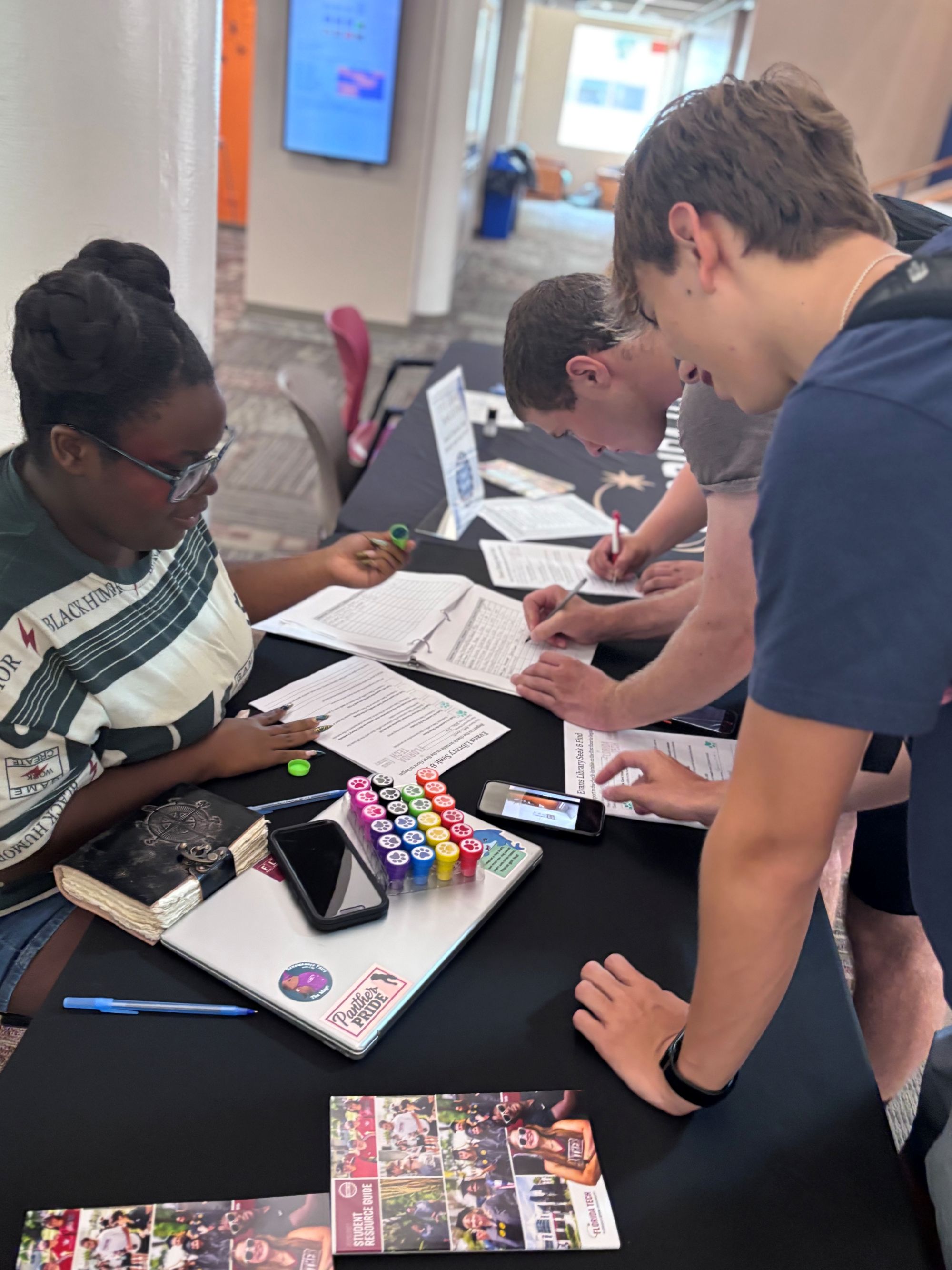
9/11/26 - The new academic year has started at Florida Tech and students are flooding into the library. And that means that our dedicated librarians are hard at work helping these students get acclimated to Florida Tech and ready to dive in to research!
Even before incoming students arrive on campus, they are assigned to their own Personal Librarian based upon their major. Personal Librarians reach out to each and every student, introducing themselves and informing students about the many resources available to them as new Panthers! And just in case they missed the email, our librarians make sure to get out there and meet our incoming students in person.

Florida Humanities Supports South Melbourne Stories
9/8/26 - Brevard County Public Libraries, in partnership with Florida Tech’s Evans Library and School of Arts and Communication, have been awarded a $10,000 Florida Humanities Public Humanities Grant for the 2026-2027 cycle to support the project, No Stone Unturned: Preserving History for Our Future.
The initiative seeks to preserve and share the voices, memories, and lived experiences of residents of South Melbourne, with particular focus on the era of segregation and integration that shaped the community during the 1950s when the Melbourne Vocational School was open through the closing of Stone High School in the 1960s. Through oral histories, public conversations, and community engagement, the project will document an important chapter in Brevard County's history and ensure these stories are preserved for future generations.
Public Humanities Grants support projects that preserve, promote, and share history and personal stories that help Floridians better understand themselves, their communities, and their state. The grant proposal was submitted by Brevard Public Libraries Director Wendi Bost in partnership with Florida Tech faculty members. Project activities are being led by Dr. Gordon Patterson, University Historian; Dr. Ted Petersen, Director of Student Media; and Nancy Garmer, Associate Dean of Libraries, who are coordinating the research, oral history collection, storytelling and community outreach efforts.
What Keeps Evans Library Humming? A Look Behind the Scenes...
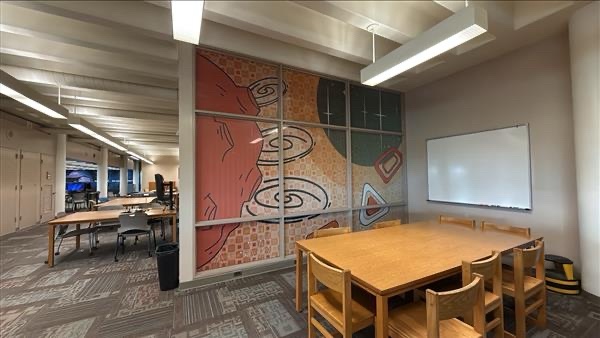
9/11/26 - When most people visit Evans Library, they probably notice our study spaces, books, computers, and helpful staff. What is not so obvious is the work that happens behind the scenes to keep library resources accessible and running smoothly. Every day, our faculty and staff collaborate across university departments and within many systems to support student success and community connection.
Each book, database, online article, and lending technology takes a full team effort. Long before an item is available for check-out, librarians, library staff, library leadership, and many university teams have spent hours researching, purchasing, processing, cataloging, organizing, and even troubleshooting these resources. From purchase to student check-out, every item available to students reflects a collaborative effort.
Where in the World
9/11/26 - After a busy but student-less summer, the Evans Library team eagerly welcomed the arrival of Orientation Week. Each fall brings the excitement of meeting a new class of students, many of whom are living away from home for the first time as they embark on a new chapter filled with independence, academic ambitions, career aspirations, and the realities of adulthood.
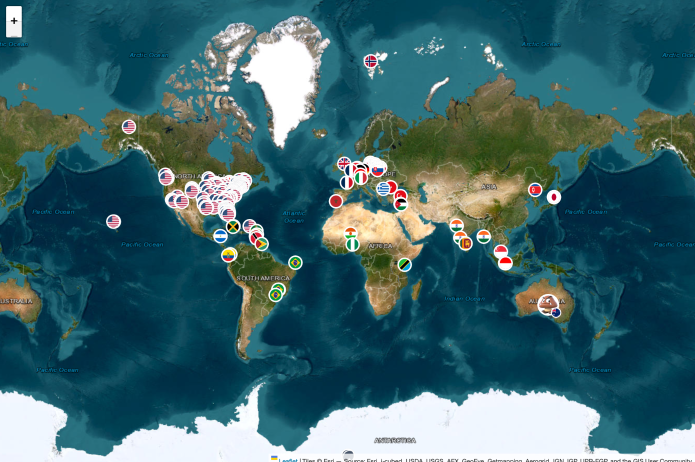
In the spirit of finding out more about our new cohort of students, Digital Scholarship and Innovation Specialist, Martin Gallagher spent some of his summer developing an app for the Library’s 85” mobile ClearTouch to set up in the lobby as a way of greeting our new students. Titled “Where in the World,” students were invited to enter their name and home address or city in as much detail as they wished, and drop a pin on the large map of the world for others to see. Scrolling in, students could zoom into Street View for a detailed look at their hometown or street.
Students quickly gathered around the display, exchanging stories about where they were from and sparking new conversations and introductions. The interactive map became a novel touchpoint for engagement, helping students connect with one another from the moment they entered the Library. In all, 274 new students dropped pins to mark their locations. Of those, 221 hailed from across the United States, including Alaska and Hawaii. Another 53 students represented 34 countries spanning Europe, Australia, South America, Africa, and Asia. The map showcased the remarkable diversity of Florida Tech's newest Panthers, with students arriving from as far away as Tanzania, Jordan, Japan, Dominica, Turkey, Poland, Singapore, and Slovakia.
Getting Crafty with Campers at Evans Library
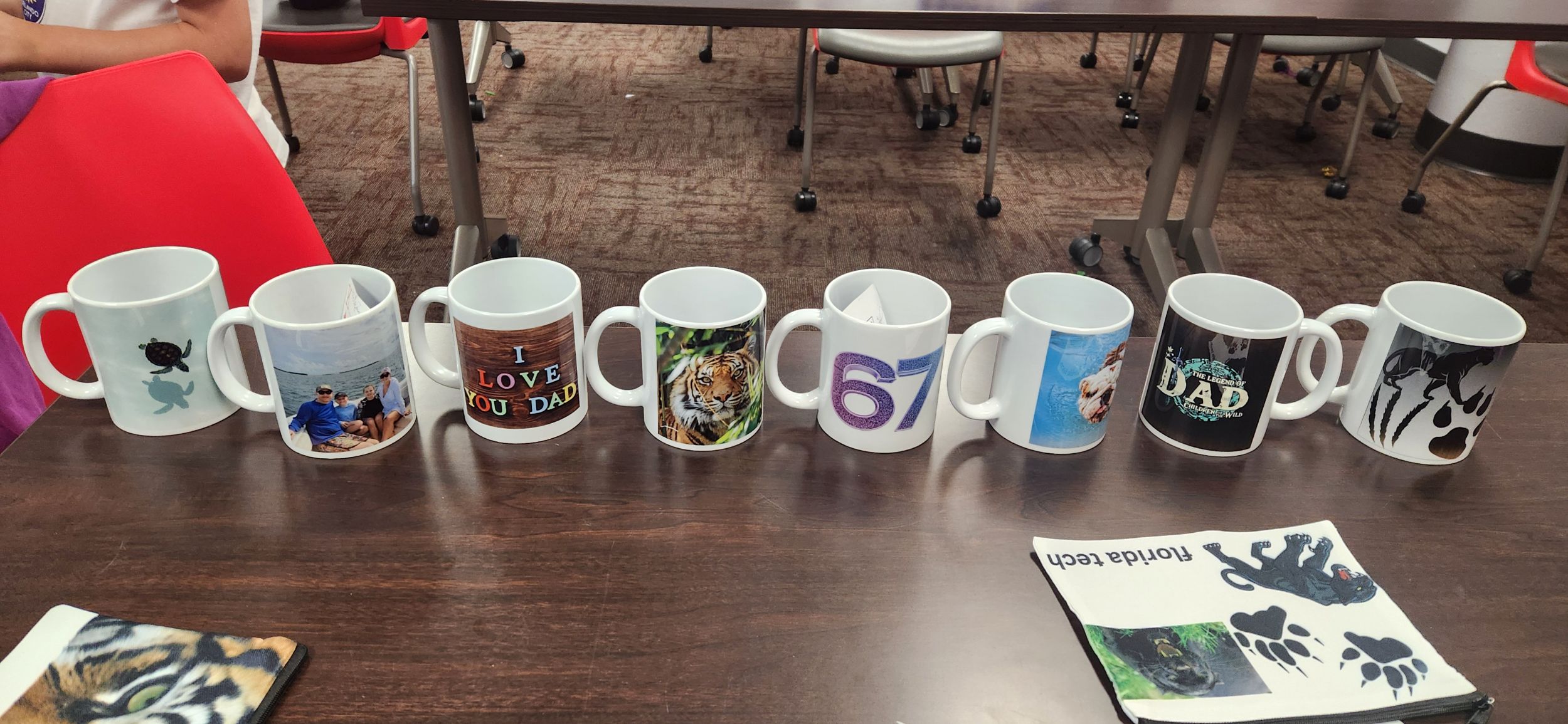
9/14/26 - When parents are looking to send their children to summer programs, they may tend to look at community centers, their local school or parks and recreation. But what if a nearby academic library offered children the chance to become inventors, designers, and makers for a week? This summer, campers ages 7-11 at Florida Tech's Evans Library explored creative technologies and brought home a new hands-on project each day, from digitally designed creations to technology-powered crafts that blended imagination with innovation.
Florida Tech expanded their summer youth programs this year and Evans Library participated in a way that showed off the maker spaces that the library faculty and staff know as the Craft Lab and the Digital Scholarship Lab. When the opportunity was presented Evans Library staff decided to develop and run a unique program that highlighted the creative side of young minds. Hosted by iDesk Supervisor Monika Parker and staff members Lauren Kruthers and Sara Bueno, the program was aptly named Summer Crafts in the Library.
Over four almost-weeklong sessions campers were able to show off their skills and make a variety of different projects throughout the program. In addition, campers were able to tour different parts of campus over the duration of their session. Tours of the Joy and Gordon Patterson Botanical Gardens and the L3Harris Student Design Center were given, along with daily lunch breaks at Panther Dining Hall to give the campers the full Florida Tech Experience. The campers got an insight into how Florida Tech students can create satellites, rocket launchers, and more while touring the L3Harris Student Design Center and even left with a 3D printer flier toy. Campers also got firsthand experience with our 3D printers and painted printed dragons that were ready to go to their new homes.
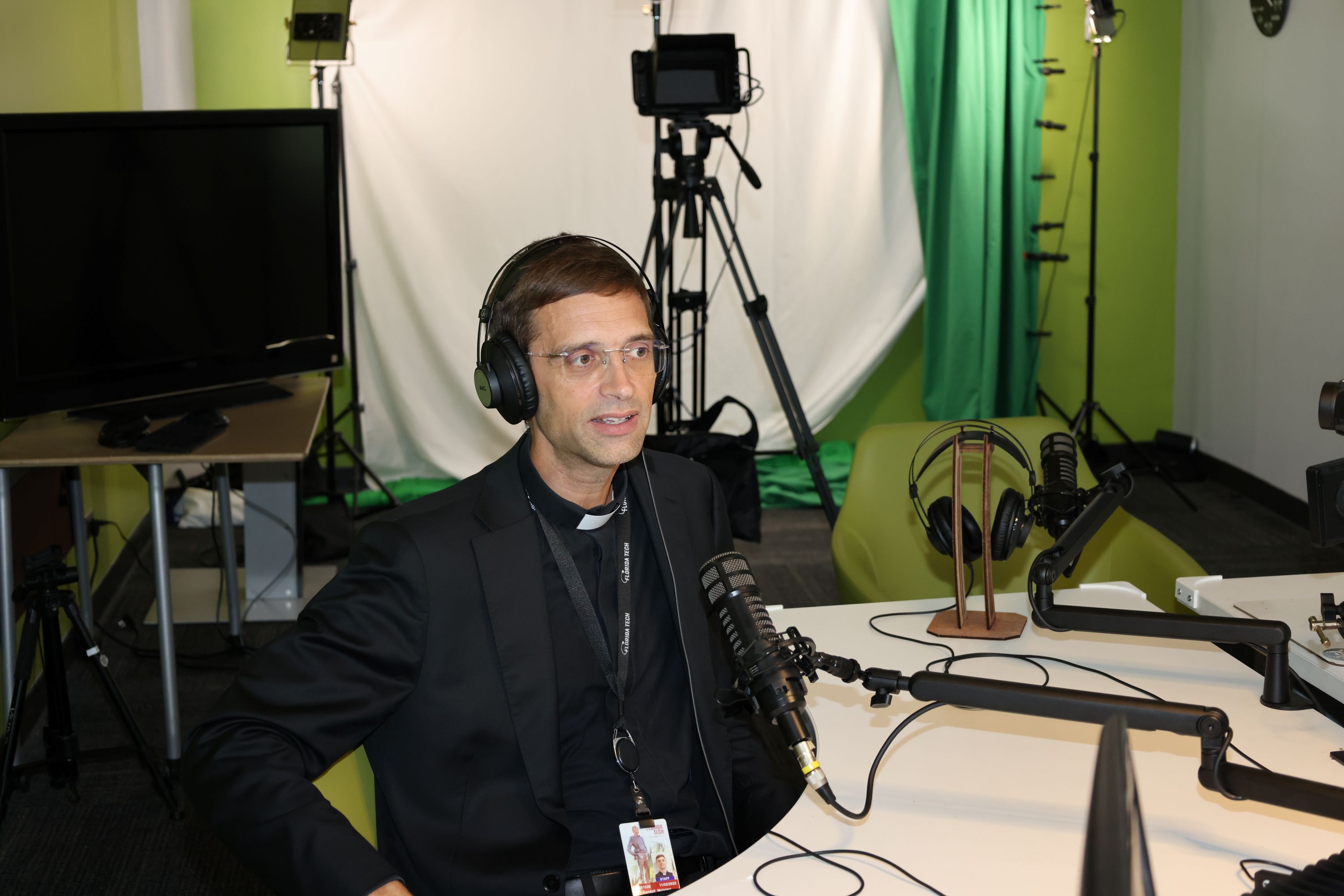
We're Meant for Community: A Conversation with Fr. Randall Meissen
9/14/26 - In this episode of the Evans Library Podcast, I talk to Fr. Randall Miessen, a Roman Catholic priest, a member of the Legionaries of Christ, and Director of the Catholic Campus Ministry at Florida Tech. Fr. Randall holds degrees in biology, philosophy, theology, Latin, and history. He attended Rice University with the intent of becoming a doctor, until the untimely death of a friend lead him to seek clarity from God on his life’s purpose. That is when he saw a poster that read, "If you're waiting for a sign from God, this is it: join the priesthood." Drawing from his own experience, Father Randall discusses how he counsels college students on discerning their vocations and major life decisions. He clarifies a common misconception that a "calling" from God must be miserable or overly burdensome; instead, a true calling utilizes one's natural aptitudes and should ultimately bring a deep sense of peace, even if the path to get there requires immense hard work and sacrifice.
A major part of Father Randall's campus ministry is taking groups of Florida Tech students on the Camino de Santiago, an ancient 500-mile pilgrimage route across northern Spain ending at the tomb of St. James the Apostle. He highlights the profound impact this journey has on young adults, as it strips life down to basic human needs and fosters solidarity with fellow pilgrims from around the world. He encourages students to live frugally on the trip, budgeting around $40 to $60 a day, which teaches them to weigh personal trade-offs and decisions, something that will bode well for the in adulthood.
In addition to his ministry duties, Father Randall teaches a "Bible as Literature" elective at the university. He focuses heavily on Genesis and First and Second Samuel, treating them as sophisticated literary works. He challenges surface-level or fundamentalist readings, emphasizing that without understanding ancient literary genres, Hebrew poetry versus prose, and allegorical context, readers miss out on the profound depth, nuance, and true meaning of the scriptures.
Catholic Campus Ministry is open to everyone, not just Florida Tech students. If you would like to attend Mass, daily Mass is at 12:05 on Monday, Wednesday, and Friday and at 12:30 on Tuesday and Thursday. Sunday Mass is celebrated at 11:00 and 6:00. All days and times are when classes are in session.